



Overview
Texas is often described as a state with a pro-growth economy and a strong commitment to free enterprise. Yet occupational licensing remains one of the most significant and least examined barriers to work in the state.
This page provides a data-driven snapshot of occupational licensing in Texas using the most recent license records published by the Texas Department of Licensing and Regulation (TDLR). The goal is simple: show the scale of licensing, who bears the compliance burden, and how licensing functions as a recurring regulatory obligation rather than a one-time requirement.
Key Takeaways
License Volume by Occupation in Texas
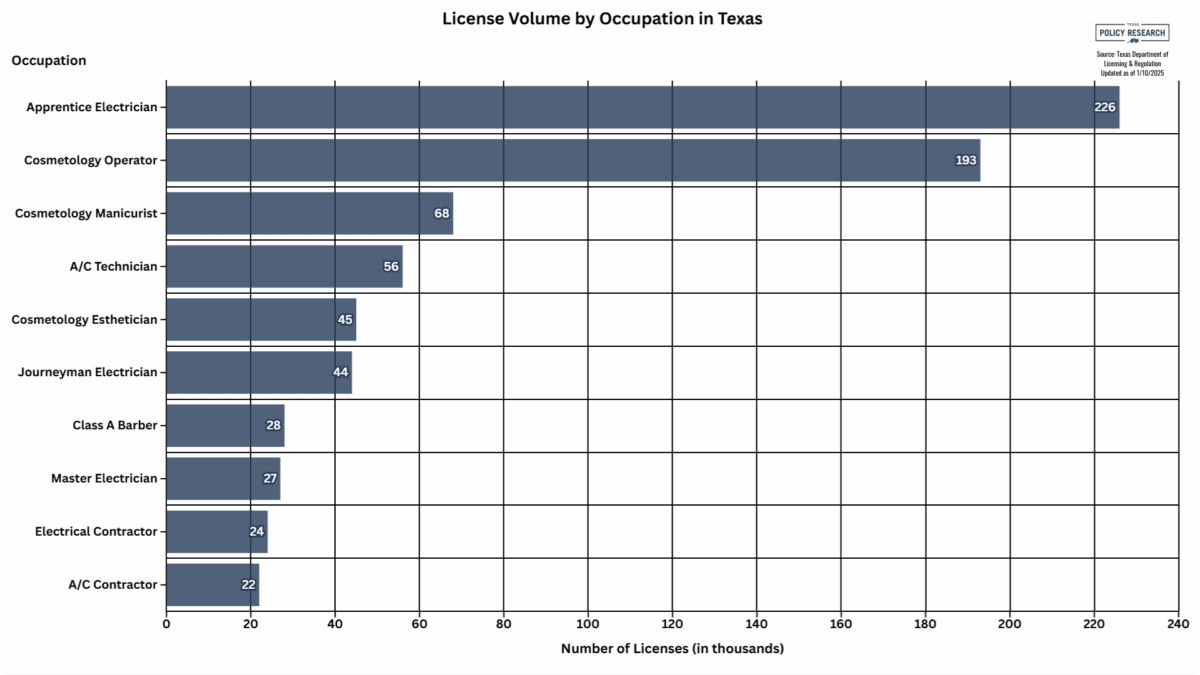
A small number of occupations account for a large share of all license records in Texas. This concentration matters because it shows that licensing policy impacts mainstream work, not just niche professions.
| Occupation | Number of Licenses |
|---|---|
| Apprentice Electrician | 226,187 |
| Cosmetology Operator | 193,978 |
| Cosmetology Manicurist | 68,914 |
| A/C Technician | 56,842 |
| Cosmetology Esthetician | 45,963 |
| Journeyman Electrician | 44,211 |
| Class A Barber | 28,964 |
| Master Electrician | 27,846 |
| Electrical Contractor | 24,931 |
| A/C Contractor | 22,784 |
Who Bears the Burden
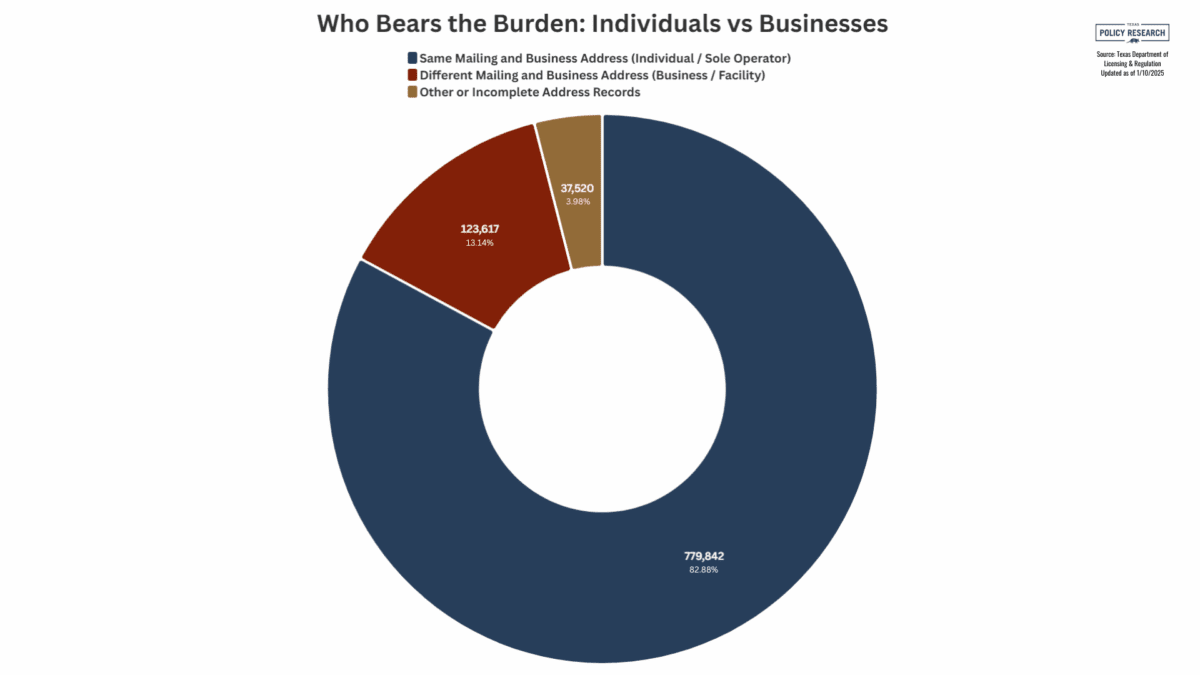
Occupational licensing in Texas largely regulates individuals rather than facilities. Most license records list the same mailing and business address, suggesting many license holders are independent operators or sole proprietors.
| License Holder Classification | Number of Licenses |
|---|---|
| Same Mailing and Business Address | 779,842 |
| Different Mailing and Business Address | 123,617 |
| Other or Incomplete Address Records | 37,520 |
Renewal and Compliance Pressure
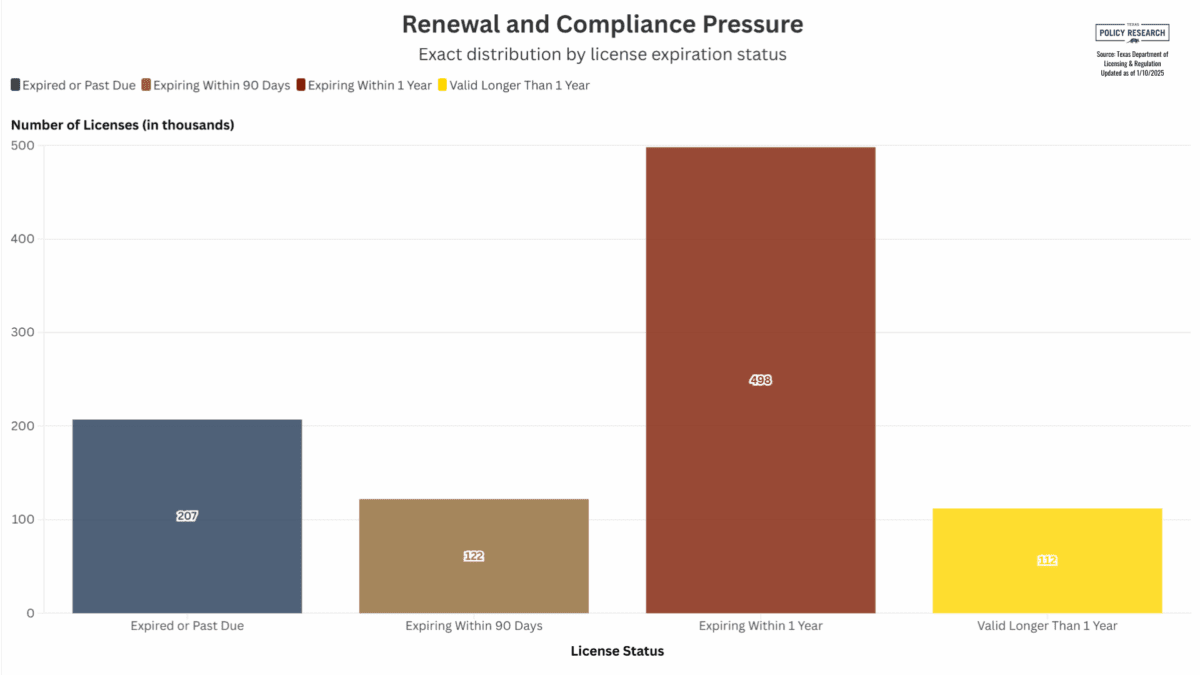
Licensing is not a one-time hurdle. The dataset contains many licenses that are expired, nearing expiration, or within a near-term renewal window. This illustrates how licensing creates continuous compliance obligations.
| License Status | Number of Licenses |
|---|---|
| Expired or Past Due | 207,184 |
| Expiring Within 90 Days | 122,317 |
| Expiring Within 1 Year | 498,924 |
| Valid Longer Than 1 Year | 112,554 |
Methodology Notes
Data source: Texas Department of Licensing and Regulation (TDLR) license records
Counts shown reflect license records in the dataset at the time of review. Records may include active licenses, expired licenses, and licenses within renewal windows.
Address classification is based on whether the mailing address and business address fields match within a given record.
Why This Matters for Public Policy
Occupational licensing is often justified as consumer protection, but the size and structure of Texas’s licensing system show a much broader impact. Licensing shapes who can enter key occupations, how easily people can transition into better work, and how much recurring compliance cost is imposed on everyday labor.
Texas lawmakers should evaluate licensing requirements with a clear standard: regulation should be narrowly tailored to genuine public safety risks, and low-risk occupations should not face unnecessary barriers to entry.
Support Our Work
Texas Policy Research relies on the support of generous donors across Texas. If you found this information helpful, please consider supporting our efforts.
Donate TodayStay in the Loop
Subscribe for occasional emails with event details, new research, and opportunities to engage with Texas policy.
Subscribe for Updates
