


Estimated Time to Read: 9 minutes
Texas has spent the better part of the last year embroiled in a bitter fight over hemp and THC. At the heart of the debate lies a fundamental split within state leadership: Lt. Gov. Dan Patrick (R) has pushed outright prohibition, while Gov. Greg Abbott (R) has argued for strict but workable regulation.
This policy divide has now culminated in Abbott’s September 10, 2025, Executive Order. The order directs state agencies to impose new restrictions on sales, marketing, and testing of hemp products. But it comes only after months of failed legislation, raising important questions about how Texas should govern in the face of disagreement and inaction.
Senate Bill 3: Prohibition as Policy
The clash began in earnest during the regular legislative session, when Patrick made prohibition a top priority. Senate Bill 3 (SB 3), authored by State Sen. Charles Perry (R-Lubbock) sought to prohibit any consumable hemp product containing cannabinoids other than cannabidiol (CBD) or cannabigerol (CBG)
This would have effectively outlawed products containing delta-8 THC, delta-10 THC, THC-P, and even non-intoxicating cannabinoids such as CBN and CBC. The legislation went far beyond simply drawing a line on intoxicating products. It created a system of steep licensing and registration fees, $10,000 per manufacturing facility, $20,000 per retail location, and $500 per individual product, that would have priced out smaller operators. It also created a wide range of new criminal offenses, including penalties for possession of “non-compliant” products, sales near schools, and marketing in packaging deemed attractive to children. Retailers would have been required to consent to warrantless inspections by state and local law enforcement as a condition of registration.
The fiscal consequences of this approach were striking. The Legislative Budget Board (LBB) projected that SB 3 would create a $37.1 million negative impact on General Revenue through the 2027 biennium, primarily because of the anticipated collapse in hemp-related sales tax revenue. Local governments were expected to lose millions more each year as retailers closed or consumers sought alternatives in the black market.
Abbott’s Veto of SB 3
Despite Patrick’s support, SB 3 did not survive the governor’s desk. Abbott vetoed the bill in June 2025, arguing that it was fundamentally flawed both legally and practically. He noted that the bill directly conflicted with federal law by criminalizing hemp products expressly legalized under the 2018 Farm Bill, pointing to Arkansas as an example where a similar law had been struck down in federal court. Abbott also raised the specter of unconstitutional takings, stressing that many Texans had invested millions of dollars in hemp-related businesses since 2019 under the assumption that those products were lawful. Criminalizing them overnight would wipe out those investments and risk making felons out of veterans, parents, and patients who were acting in good faith.
Abbott’s veto was more than a rejection; it was a clear call for an alternative. He emphasized the need for a regulatory framework that could withstand legal challenges while protecting children and curbing abuses in the market. He suggested modeling such a framework on the state’s alcohol laws, with strict rules but with durability and enforcement capacity. In short, Abbott acknowledged the concerns driving SB 3 but argued that prohibition was a flawed and unenforceable solution.
Special Session I: Patrick Doubles Down
When Abbott called the first special session in July 2025, his intent was to pursue regulation, not prohibition. He asked lawmakers to consider measures such as prohibiting sales to minors, restricting sales near schools, requiring child-resistant packaging, mandating testing and transparent labeling, and creating a permit system for retailers. Patrick, however, refused to pivot. He again pushed legislation, Senate Bill 5, that mirrored the prohibitionist framework of SB 3 by banning any detectable amount of cannabinoids other than CBD and CBG.
The debate unfolded against a backdrop of revealing polling data. A University of Texas/Texas Politics Project survey in June 2025 found that 53 percent of Texans opposed an outright ban, with only 31 percent in support. A separate McLaughlin & Associates poll in July 2025 showed that 79 percent of Texans preferred keeping hemp-derived products legal with added regulations, including strong majorities of Republicans, Democrats, and independents. These results underscored that while Patrick’s prohibition push may have had traction among a segment of Republican primary voters, it did not reflect the broader electorate’s preferences.
Ultimately, the first special session ended in gridlock. The Senate pressed ahead with prohibition, the House hesitated while also dealing with a quorum break of Democrat lawmakers over proposed redistricting maps, and the governor’s call for a regulatory framework went unanswered.
Special Session II: SB 6 Repeats the Mistakes
Patrick did not let up. During the second special session, Perry filed SB 6, which essentially reprised the prohibition-first model of SB 3. The bill once again sought to ban all cannabinoids other than CBD and CBG, even those with therapeutic and non-intoxicating properties. It imposed steep fees, $10,000 per manufacturer, $20,000 per retailer, and $500 per product, and layered on broad inspection powers for law enforcement. Violations would carry criminal penalties ranging from misdemeanors to third-degree felonies.
The LBB projected that SB 6 would cause a $23.7 million revenue loss to the state during the 2026–27 biennium, with local governments losing millions more annually in sales tax revenue. Despite Abbott’s earlier veto message warning against precisely these kinds of policies, the Senate once again passed the bill. The House, however, refused to consider it, leaving SB 6 to have its legislative prospects cut short. The repeated failure to reconcile prohibition with regulation underscored the deep divide between Abbott and Patrick, as well as the Legislature’s inability to produce a viable compromise.
Abbott’s Executive Order GA-56
Faced with continued legislative inaction, Abbott took matters into his own hands. On September 10, 2025, he issued Executive Order GA-56, directing the Department of State Health Services, the Texas Alcoholic Beverage Commission, and the Department of Public Safety to immediately implement a set of regulations on hemp products. The order prohibited sales to anyone under 21 and required mandatory identification checks. It barred sales near sensitive locations such as schools, churches, and playgrounds. It mandated third-party lab testing and QR code labeling for transparency and required child-resistant packaging to protect minors. The order also prohibited candy-style packaging and marketing that could attract children. Finally, it tasked state agencies with coordinating enforcement and oversight to ensure compliance.
In effect, Abbott used his executive authority to impose the regulatory framework he had advocated for after vetoing SB 3.
The Problem with Executive Orders
Abbott’s executive order addressed many of the public safety concerns raised by both lawmakers and parents. It set age limits, imposed packaging standards, and required testing, all sensible steps in a regulatory regime. But the method by which he enacted these rules poses its own set of problems. Governing by executive order is no substitute for legislative action.
By sidestepping the Legislature, Abbott expanded the power of the executive branch at the expense of representative lawmaking. While legislation is debated, amended, and voted on in a public process, an executive order is issued unilaterally. That concentration of power undermines the principle of limited government. Moreover, executive orders are inherently unstable. What one governor imposes today can be undone tomorrow, leaving businesses and consumers in a state of uncertainty. Without the durability of statute, Abbott’s regulatory framework may not survive a legal challenge or a change in leadership.
This approach also risks setting a troubling precedent. If hemp regulation can be reshaped by executive order, other policy areas could be as well. That is not how a system grounded in constitutional separation of powers is supposed to work. Texans deserve laws that endure, not temporary edicts issued in response to legislative gridlock.
Liberty Principles at Stake
The hemp debate illustrates how liberty principles intersect with policymaking. Patrick’s prohibition bills undermined individual liberty by criminalizing adults for using federally legal products. They disregarded personal responsibility by assuming Texans could not be trusted to make their own decisions, and they crushed free enterprise by imposing fees and banning entire product categories. They also eroded private property rights by subjecting businesses to warrantless inspections and undermined limited government by creating a massive enforcement apparatus.
Abbott’s executive order avoided some of these pitfalls, preserving consumer access while focusing on minors and marketing abuses. Yet it still raised concerns about liberty by expanding executive discretion and bypassing the Legislature. Individual liberty is left vulnerable when access to products depends on a governor’s decree rather than durable law. Free enterprise suffers when business owners face regulatory uncertainty instead of clear statutes. Private property rights are threatened when agency enforcement powers are defined by executive order rather than legislative guardrails. And limited government is undermined whenever one branch assumes powers meant to be exercised collectively.
Political Takeaways
The political implications of this saga are significant. The clash between Abbott and Patrick has revealed deep policy differences at the top of Texas Republican leadership, with Abbott favoring regulation and Patrick insisting on prohibition. The Legislature’s repeated failure to reconcile these approaches left a vacuum that the governor filled with executive action. Public opinion, meanwhile, has consistently shown that Texans prefer regulation with safeguards to prohibition. Lawmakers risk being out of step with their constituents if they continue to push bans that criminalize responsible adults and drive commerce underground.
Lt. Governor Patrick made his position unmistakably clear at the close of the second special session,

“After long discussions last night between the Governor, Speaker, and me on THC, and continued hours of discussion today, we were not able to come to a resolution. I appreciate the effort by Gov. Greg Abbott to find a solution. I thank Speaker Dustin Burrows and Republican House members for joining the Senate in passing a complete THC ban during the regular session. My position remains unchanged; the Senate and I are for a total THC ban.”
Source: Lt. Gov. Dan Patrick (R) Twitter/X Post, 9.3.2025 (LtGovTX)
That statement underscored that the rift between prohibition and regulation was not one of minor disagreement but a fundamental divide.
When Abbott announced his executive order, he framed it as a middle ground that prioritized children’s safety while leaving adults free to make choices. He said:
“Hemp should not be sold to our kids. Today, I issued an Executive Order cracking down on unsafe hemp products — banning sales to minors, strengthening enforcement & ensuring Texans know what they’re buying. Safety for kids, freedom for adults.”
Source: Gov. Greg Abbott (R) Twitter/X Post, 9.10.2025 (@GregAbbott_TX)
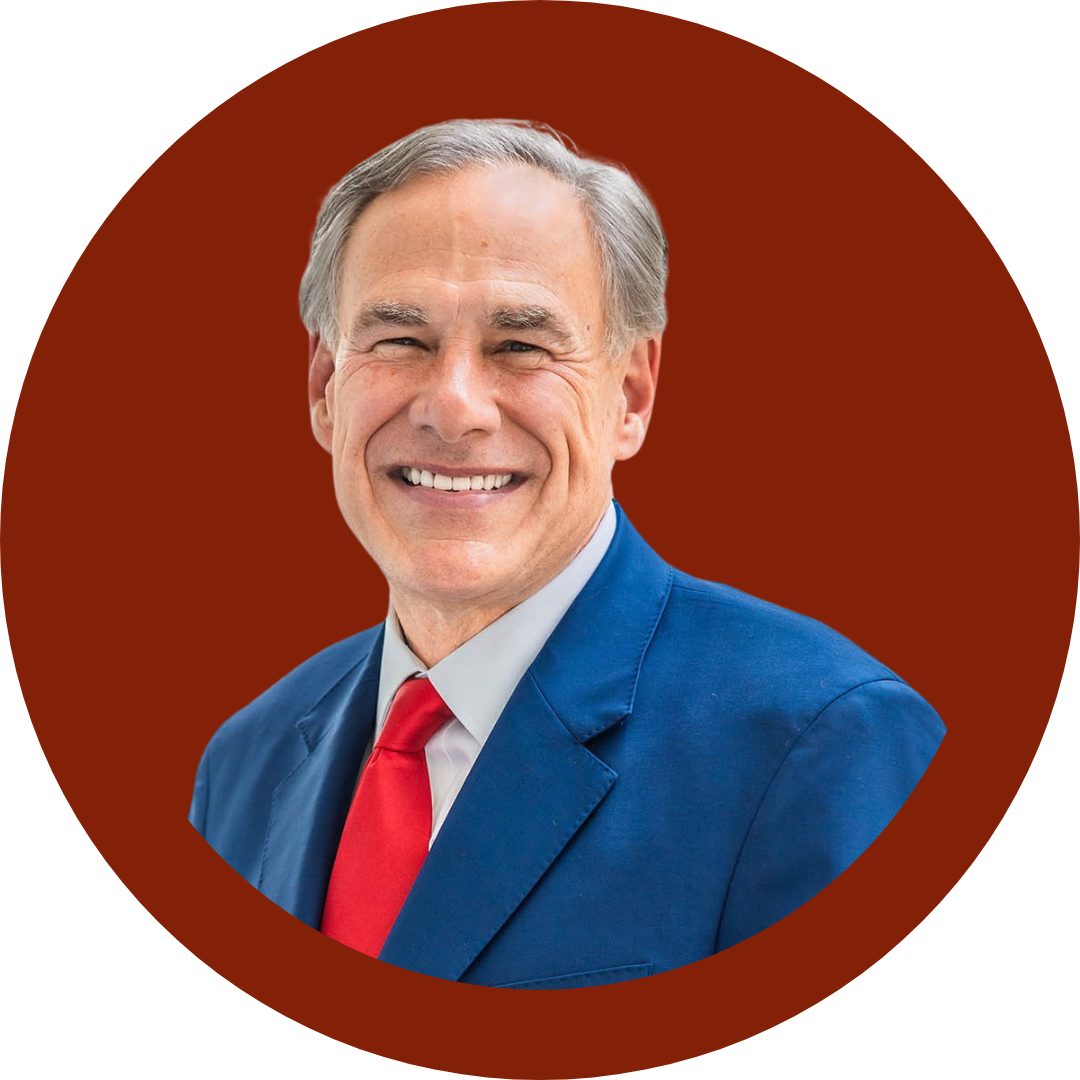
Agriculture Commissioner Sid Miller (R) quickly applauded the move, writing:

“These are the common sense reforms which Texans demanded! Well done, Greg Abbott. Protecting our kids and defending our freedoms do not need to be at odds.”
Source: Commissioner Sid Miller (R) Twitter/X Post, 9.10.2025 (@MillerForTexas)
Taken together, these comments capture the range of Republican sentiment on the issue. Patrick and the Senate remain committed to prohibition. Abbott has positioned himself as the champion of regulation. And Miller’s support shows that some statewide leaders are eager to back the governor’s regulatory approach rather than continue down the politically fraught path of prohibition.
Conclusion: Texans Deserve Laws, Not Edicts
Governor Abbott’s Executive Order GA-56 may address immediate safety concerns, but Texans deserve clarity through laws, not executive decrees. Prohibitionist policies pushed by Patrick and embodied in SB 3 and SB 6 would have devastated businesses, criminalized adults, and invited federal lawsuits. Abbott was right to veto them. But replacing legislative failure with unilateral executive action is not a true solution.
The path forward should be clear. Texas must adopt a framework that protects children, respects liberty, sustains free enterprise, and follows constitutional process. That means legislators must step up and do their jobs. Texans deserve governance through the lawmaking process, not government by executive order.
Texas Policy Research relies on the support of generous donors across Texas.
If you found this information helpful, please consider supporting our efforts! Thank you!

