

Estimated Time to Read: 11 minutes
A major national shift toward government-seeded investment accounts began when President Donald Trump (R) signed the One Big Beautiful Bill Act, creating “Trump accounts” for children born between January 2025 and December 2028. These accounts receive a one-time $1,000 federal deposit, with families allowed to add up to $5,000 annually. Funds cannot be withdrawn until the child turns eighteen.
Public interest surged when Michael and Susan Dell recently pledged $6 billion to seed an additional 25 million accounts with $250 each for children born outside the federal eligibility window. The Dells framed the program as a powerful tool for building long-term financial stability through compound interest. Federal projections show fully funded accounts could reach seven figures by age 28, while the initial federal deposit alone may grow meaningfully over 18 years.
This national enthusiasm for government-facilitated wealth creation has influenced policymakers in several states. No state leader has embraced the concept more aggressively, it seems, than Texas Lt. Gov. Dan Patrick (R).
Introducing Dan Patrick’s “New Little Texan Savings Fund”
Patrick announced his intention to create a Texas-specific version of the federal model on Wednesday. The “New Little Texan Savings Fund” would provide every newborn in Texas with a $1,000 state-funded contribution (taxpayer-funded), invested in an account aligned with the S&P 500. With nearly 400,000 births annually, the program would require roughly $400 million in recurring state spending. Patrick notes that this equals about 1% of Texas’s state budget.

“One of my top priorities in the 2027 legislative session will be to pass the “New Little Texan Savings Fund” to give newborn Texans an additional $1,000 each, invested in the S&P 500 as aligned with the federal program.”
“This new initiative will cost our budget about $400 million per year. That is about 1% or less of our total state appropriations. We will amend the state constitution to add this as a permanent program. This is a great way to return money back to families and to teach the value of savings and compound interest to young Texans.”
Source: Texas Lt. Gov. Dan Patrick (R), Twitter/X post 12.3.2025
To secure the program permanently, Patrick plans to pursue a constitutional amendment. This would lock the program in place and prevent future legislatures from modifying or repealing it without another vote of the people. Patrick frames the program as a pro-family initiative that teaches financial responsibility and sets Texans on a path toward long-term financial opportunity.
Patrick’s Earlier Push for a Texas Sovereign Fund
Patrick’s support for government-managed investment structures did not begin with the newborn savings idea. Earlier this year, he championed the creation of a “Texas Sovereign Fund,” a proposal expected to be filed as Senate Bill 23 (SB 23). That bill never materialized, and instead, SB 23 ended up being completely different legislation, though Patrick continued his broader objective through Senate Joint Resolution 4 (SJR 4), which would raise the constitutional cap on the Economic Stabilization Fund (ESF), or Rainy Day Fund, from 10% to 15% of applicable revenue.
Raising the cap would allow the state to retain billions in excess oil and gas tax revenue rather than letting those dollars flow into general revenue, where they could be used for things like tax relief. Critics argued that SJR 4 would transform the Rainy Day Fund into a de facto sovereign wealth fund, stockpiling taxpayer dollars far beyond what was intended. Abandoning SB 23 but continuing to push SJR 4 indicated Patrick’s ongoing interest in expanding the state’s role as a centralized investor of public funds.
The New Little Texan Savings Fund continues this pattern. Instead of hoarding billions in a central pot, the state would initiate hundreds of thousands of individual accounts each year, funded with public money but controlled and structured by the government. Despite differences in mechanics, both ideas reflect a philosophical shift toward government-managed wealth creation.
SJR 4 Advanced in the Senate but Stalled in the House
It is also worth noting that SJR 4 passed the Texas Senate by a vote of 23 to 7. Despite that momentum, the resolution stalled in the House. It was left pending in the House Appropriations Committee and never considered by the full Texas House of Representatives, meaning it was not ultimately enacted. This legislative history underscores that there is significant hesitation within the Legislature about expanding the state’s role in wealth management or raising the cap on state-held reserves. The House’s reluctance should serve as a cautionary signal as Texas now considers a similar philosophical shift through the newborn savings proposal.
Evaluating Patrick’s Newborn Fund Through Liberty Principles
Patrick’s proposal may sound helpful on its surface, but it raises deeper questions when examined through the lens of Texas’s core liberty principles. Limited government, personal responsibility, free enterprise, private property rights, and individual liberty have long guided how Texans judge the proper scope of state action. When viewed through these standards, the “New Little Texan Savings Fund” represents a significant departure from the traditional Texas model and introduces concerns that go far beyond its price tag.
Limited Government and the Expansion of State Responsibility
Creating a statewide investment program for every newborn places the government at the center of personal financial life. A constitutionally guaranteed program of this scale represents a permanent expansion of the state’s responsibilities. Limited government depends on a restrained and predictable scope of authority. Patrick’s proposal moves Texas in the opposite direction by institutionalizing a long-term government role in wealth initiation.
Personal Responsibility and the Risk of State-Driven Dependency
The program encourages a view that financial responsibility begins with government action. While savings and investment are valuable habits, they are traditionally cultivated by families through voluntary means. When the state creates, seeds, and manages an account for every child, it shifts the locus of responsibility away from individuals. This erodes the principle that citizens, not the state, should initiate their own financial planning.
Free Enterprise and Government Participation in Investment Markets
This proposal reflects the same flawed logic that underpins sovereign wealth funds. When the government positions itself as a long-term investor, it inevitably distorts private markets, centralizes financial power, and expands bureaucratic influence over economic outcomes. Texas has consistently rejected the idea that government should compete with the private sector or function as a state-controlled investment fund. Introducing publicly seeded accounts for every newborn moves Texas closer to a model where government, not markets, directs financial opportunity.
Private Property Rights and the State as the Origin of Wealth
Under Patrick’s proposal, the state becomes the initial creator of property for every newborn. While the funds may eventually belong to the child, the origin of the asset lies with the government rather than the family. Property rights are strongest when ownership arises from individual effort or voluntary support. A model where the state constructs wealth for individuals begins to echo collectivist philosophies that position government as the source of economic opportunity.
When Conservatives Back Government Wealth Accounts
The momentum behind government-created investment accounts is not limited to progressive policymakers. The federal Trump accounts have received bipartisan support, including from U.S. Senator Ted Cruz (R). In a letter encouraging Fortune 1000 companies to contribute voluntarily to the federal accounts, Cruz argued that the program ensures every American child becomes an “immediate shareholder” in major U.S. companies and benefits from compound growth.
Cruz’s enthusiasm underscores the broad rhetorical appeal of these ideas. Becoming a shareholder sounds empowering and patriotic, yet the liberty implications remain unchanged. Government-seeded accounts, whether at the federal or state level, reflect a collectivist shift in how policymakers view the role of government in personal financial life.
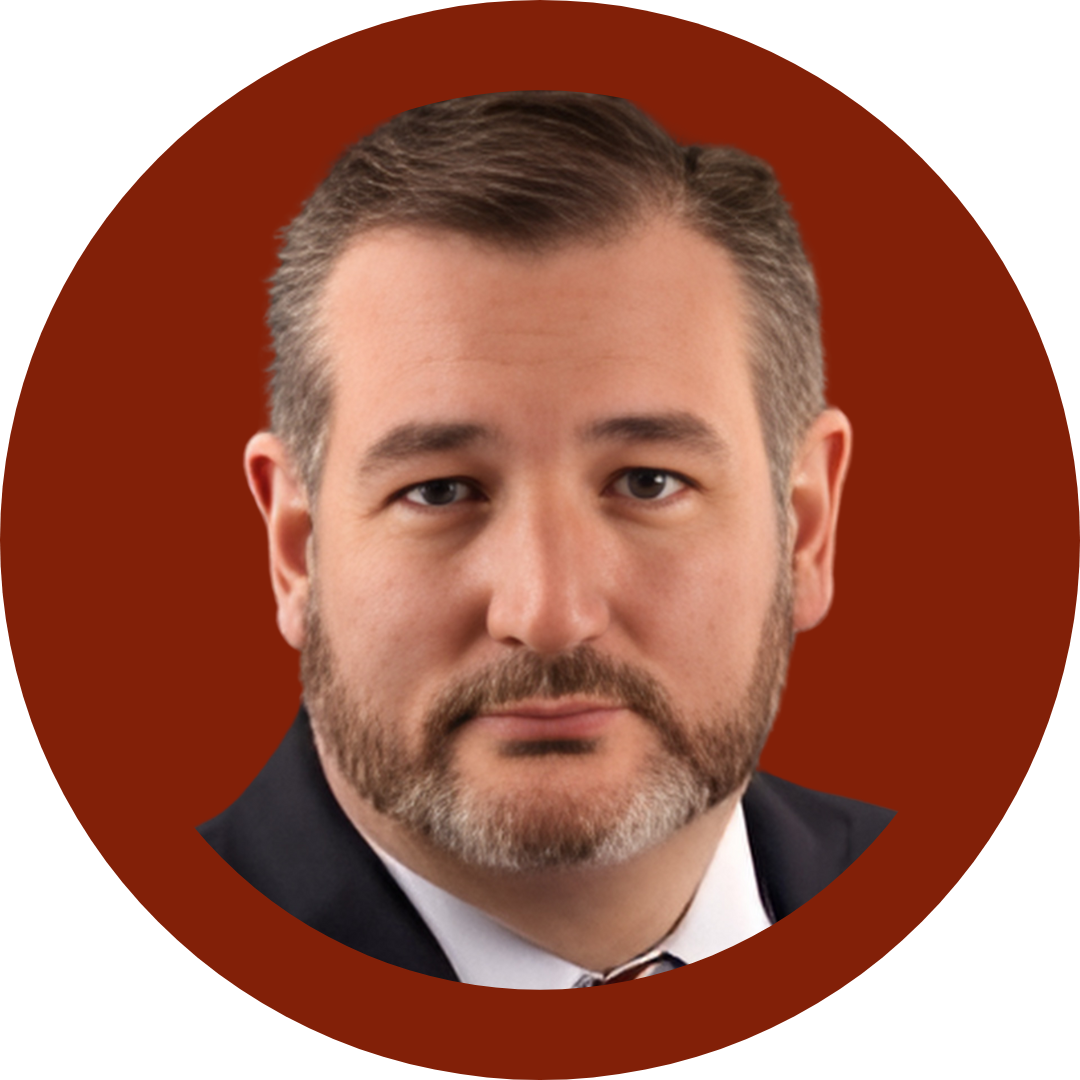
“These tax-advantaged Trump accounts ensure that every American child is an immediate shareholder in America’s largest companies and will experience the miracle of compound growth through their lifetime.”
Source: U.S. Senator Ted Cruz (R), Twitter/X Post 12.3.2025
Cruz’s comments were directed at the federal program and not Patrick’s Texas-specific proposal, but they highlight a growing trend across both parties to use government as the initiator of wealth creation rather than leaving that responsibility to individuals and families. Popularity, even bipartisan popularity, does not resolve the liberty concerns inherent in the structure.
Why Texans Should Approach the Proposal with Caution
Even if the plan appears attractive in theory, its long-term implications demand careful scrutiny. A permanent program of this scale reshapes the role of government, redirects taxpayer dollars toward new obligations, and normalizes a collectivist approach to personal financial planning. Before Texas commits itself constitutionally to a newborn investment fund, voters deserve to understand the fiscal, structural, and philosophical consequences that accompany it.
Locking New Spending Outside Texas’s Spending Limit Raises Serious Fiscal Concerns
Embedding the “New Little Texan Savings Fund” in the Texas Constitution also removes it from the state’s normal appropriations process and from the limits designed to restrain government growth. Once spending is placed outside the constitutional spending cap, it becomes insulated from annual scrutiny and legislative discipline. We have critiqued this approach before because it undermines the very guardrails Texans rely on to keep government small, predictable, and accountable. A policy locked into the Constitution becomes effectively permanent, even if future lawmakers or voters conclude the program is unaffordable or inconsistent with the state’s fiscal priorities. Using constitutional amendments to bypass spending limits and expand government obligations is a dangerous precedent that grows state power while weakening taxpayer protections.
A State That Hoards Surplus Dollars Begins to Function Like a For-Profit Entity
Texas government was never meant to be a for-profit institution. Yet in recent years, the state has accumulated surpluses so large that the Economic Stabilization Fund has reached its constitutional cap. When that happens, excess oil and gas severance tax revenue flows into general revenue, where lawmakers can choose where to spend it. That is already a problem, but raising the cap to keep even more taxpayer dollars locked away defeats the very purpose of having a cap in the first place. The ESF was designed as an emergency reserve, not a permanent stockpile of over-collected revenue. When the state collects more than it needs, those dollars should be returned to the taxpayers who earned them. Accumulating billions in unused balances while Texans face rising property taxes and cost-of-living pressures is the opposite of limited government.
The problems with sovereign wealth funds and with state-run newborn accounts are fundamentally connected. Both assume that the government can responsibly collect, retain, and invest ever-growing pools of taxpayer money, but experience shows the opposite. When the government accumulates excess revenue, it rarely returns those dollars to taxpayers. Instead, the money becomes a justification for new programs, new spending, and new political priorities. Texans do not need another mechanism that encourages the government to hoard revenue rather than reduce taxes and limit spending.
Permanent Spending Obligations Without Structural Tax Relief
Patrick’s program requires hundreds of millions of dollars each year. If the state can afford such a costly new obligation, it can afford to reduce the tax burden Texans face. Structural relief empowers families directly. A permanent state-run account redirects resources toward a new government role rather than reducing the size of government.
Administrative Growth and Long-Term Bureaucracy
A statewide newborn savings fund requires new administrative systems, oversight, account management, and long-term monitoring. Government bureaucracies rarely shrink. Once launched, such a program becomes a permanent fixture of state government, normalizing an expanded role for the state in personal finance.
A Shift Toward Collectivist Fiscal Structures
Programs like the New Little Texan Savings Fund shift Texas toward a collectivist financial model. They treat financial security as something generated by the state rather than earned or accumulated through voluntary action. Even with good intentions, this marks a departure from the Texas Model of small government and personal autonomy, and is almost assuredly not grounded in any definition of Conservative principles.
Together, these fiscal, constitutional, and structural concerns reveal a pattern: Texas is moving toward policies that expand the role of government in managing wealth rather than returning over-collected revenue and trusting individuals to make their own financial decisions.
Texas Should Choose Liberty Over State Wealth Funds
Texas’s strength lies in its commitment to limited government, personal responsibility, private property rights, and free enterprise. Lt. Gov. Patrick’s “New Little Texan Savings Fund” proposal conflicts with each of these pillars. While the program may appeal to a desire to help families, its structure represents a significant expansion of government and moves Texas toward a collectivist approach to wealth creation.
Texas does not need a state-managed investment program for every newborn to build a prosperous future. It needs lower taxes, reduced regulation, and a renewed focus on liberty. Texans thrive when they are trusted to build their own futures, not when government initiates financial pathways on their behalf.
Texas Policy Research relies on the support of generous donors across Texas.
If you found this information helpful, please consider supporting our efforts! Thank you!

